
"coffee growing climate"
10000 article(s) found

The History of Coffee in Colombia the types and characteristics of Climate in Coffee growing areas
Colombian coffee, which accounts for about 12% of the world's coffee supply, is highly respected worldwide and is one of the major participants in the global coffee industry. The main reason is that the efficient infrastructure provided by rural farmers and the early growth of coffee exports in the region have made it a great power today. History and Geography of Colombian Coffee: the Origin Story of Colombian beans has been passed through several

Introduction to the Fine Coffee Bean Manor in Guatemala Coffee growing Environment
Guatemala is located in the tropics, the northern and eastern coastal plains have a tropical rain forest climate, the southern mountains have a subtropical climate, the year is divided into two dry and wet seasons, with the wet season from May to October and the dry season from November to April of the following year. The narrow and fertile flatlands on the Pacific side of Guatemala have a tropical climate. The central plateau is also the cultural center of Guatemala, where the year-round temperature ranges from 1300 to 1800 meters.

Columbia with a long aftertaste, the cultivation of exquisite boutique coffee beans, geographical location, climate and altitude
No matter in terms of yield or texture, Colombian coffee is first produced by Medellin, which is characterized by full granules, rich nutrition, moderate acidity, good balance, rich aroma and soft taste. In addition to Medellin, the provincial capitals of two neighboring provinces in the south, Armenia and Manizales, are also famous coffee producers.

Coffee planting method Coffee Origin Colombian Coffee
The suitable climate of Colombian coffee provides a real natural pasture for coffee. Coffee trees in Colombia are mainly cultivated in the Andes, on steep slopes about 1300 meters above sea level, where the annual temperature is about 18 degrees Celsius, annual rainfall is 2000 to 3000 mm, latitude 1-11-15, longitude 72-78 the suitable climate of Colombia provides coffee.

Introduction of Rwandan Coffee with Tropical Climate characteristics Lute Xilo producing area in the Western Province
The taste of Rwandan coffee is described as a grassy aroma with tropical climates. in addition to the sweetness of fruit, this coffee also gives people a feeling of freshness, clarity, and freshness. Bourbon coffee grown in Rwanda is amazing for its sweet fruit, full-bodied, unrestrained and lingering aftertaste. This kind of coffee is delicious.

Introduction to Colombian Coffee with mild Climate and humid Air
Colombia's mild climate, humid air, and diverse climate make it a harvest season all year round, with different kinds of coffee ripening at different times. What they grow is Arabica coffee beans of unique quality, and the coffee made from this coffee bean has a rich taste and endless aftertaste, which can be called fine coffee. Nowadays, many people combine Colombian coffee with high quality and delicious coffee.

Introduction of Crystal Coffee in Cuban Coffee producing areas with humid Climate and abundant Rain Water
With fertile land, humid climate and abundant Rain Water, Cuba can be called a natural treasure land for coffee cultivation. The suitable natural conditions provide a favorable natural environment for the growth of coffee trees. Coffee is well cultivated and developed here, and the best coffee growing area in Cuba is located in the Central Mountains. Because in addition to growing coffee in this area, there are also precious minerals such as quartz and crystals.

Boutique coffee Kona beans growing on the slopes of volcanoes
The quality of the fine Kona coffee in the growing environment is suitable for the suitable geographical location and climate. Coffee trees grow on the slopes of volcanoes, and their geographical location ensures the altitude needed for coffee to grow; the dark volcanic ash soil provides the necessary minerals for coffee. This is probably due to the fact that Kona Island is rich in volcanic black mud with moderate acidity, rich mineral content and water content.

The growing environment of Kona coffee
The quality of the fine Kona coffee is suitable for the right geographical location and climate. Coffee trees grow on the slopes of volcanoes, and their geographical location ensures the altitude needed for coffee to grow; dark volcanic ash soil provides the necessary minerals for coffee. This is probably due to the fact that Kona Island is rich in volcanic black mud with moderate acidity, rich mineral content and suitable water content.
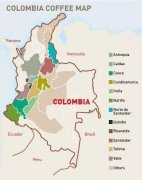
Columbia Coffee History, Climate, Environment, Coffee Flavor
Colombian coffee beans grow at high altitudes and are carefully cared for in the shade of banana and rubber trees. This kind of coffee is one of the best in the world. Rich, mellow, perfectly balanced. Colombia's arid mountains and well-drained, fertile volcanic soil provide ideal conditions for growing quality coffee. Coffee in Colombia is mainly grown in two regions, one

Introduction of Ugandan Coffee beans with mild Climate and suitable for growing Coffee
Uganda is a landlocked country in eastern Africa, straddling the equator, bordering Kenya to the east, Tanzania and Rwanda to the south, the Democratic Republic of the Congo to the west and Sudan to the north. Most of the territory is located in the Central African Plateau, with lakes, with an average elevation of 1000,000,000 meters above sea level. There are many lakes and plateaus in the mountains, which are known as the water villages of the plateau. The western branch of the East African Rift Valley runs through the western border, with many rivers and lakes at the bottom of the valley. There is a Victor in Uganda.

Rwanda washed bourbon coffee
Rwanda is known as the country of a thousand hills, with many mountains and plateaus, and most areas are tropical plateau climate and savanna climate, mild and cool. There are about 33000 hectares of coffee plantations and 500000 people are engaged in the coffee industry. With good natural conditions of high altitude and fertile volcanic soil, the country's fertile soil and suitable climate contribute to plant growth, and coffee trees seem to be driven.

Ethiopian coffee climate
Following Cafe (Wechat official account vdailycom) found that Beautiful Cafe opened its own shop for Ethiopian Coffee Climate if you like coffee, there is one more reason to pay attention to climate change. Ethiopia, an important coffee producer, will be greatly affected if global warming is not contained, and at worst nearly 60% of the country's coffee-producing areas will be affected, according to a new study.

Panamanian Coffee growing area, Panamanian Climate
Following Cafe (official Wechat account vdailycom) found that the microclimate of the Panamanian Heights is the most important resource that makes Panamanian coffee unique. The most important resource that makes Panamanian coffee unique is its microclimate. The east-west environment of the Republic of Panama allows cold air to flow through the Central Mountains and converge in 6500.

What are the soil and climate requirements for growing coffee beans
Coffee tree belongs to Rubiaceae (Rubiaceae), which is a shrub or small tree. It is native to subtropical Africa or Asia. The seeds in its berries are the main raw materials of coffee. Commercially, the seeds of coffee are called coffee beans (coffee bean). Flowers and fruits of coffee trees Coffee flowers grow in leaf axils, Corolla basin-shaped, cheese-colored or white, ovary two-loculed, one ovule per locule, fruit pulp

What is the coffee microclimate? What is the growing environment of coffee related to?
Professional coffee knowledge exchange more coffee bean information Please pay attention to the coffee workshop (Wechat official account cafe_style) the term boutique coffee was first put forward by Ms. Erna Knutsen (Erna Kennusen) in the monthly Coffee and Tea magazine. Special geographic microclimates produce beanswithunique flavor profiles, which she
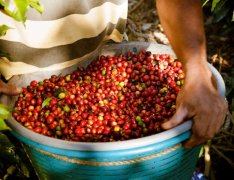
Las Haras, Costa Rica, baking degree and flavor of hand-picked coffee beans 100% Arabica
The growing environment of Costa Rican coffee beans: Costa Rica has a unique advantage in producing high-quality coffee beans with excellent aroma and flavor due to its high altitude, fertile volcanic soil, warm temperature, stable rainfall and tropical climate. Arabica coffee beans come from delicate plants and require specific climatic conditions to thrive, including high altitude and temperature.

A brief introduction to the cultivation of sweet and mellow boutique coffee beans, geographical location, climate and altitude
Alishan Mafeel coffee belongs to alpine coffee and belongs to the high-quality boutique coffee in Taiwan. It ranks first in Asia and eighth in the world. Coffee trees are mainly planted in southern Taiwan, such as Alishan in Chiayi County, Taiwan. because of its high altitude, Alishan is not only suitable for growing tea, but also more suitable for growing coffee. Belong to coffee

What are the local conditions? How will coffee be affected under these conditions?
Professional coffee knowledge exchange more coffee bean information please follow the coffee workshop (Wechat official account cafe_style) We often hear the word "local conditions" when talking about coffee, but what exactly does "local" mean? Does it have anything to do with the flavor of coffee? Why do we need to care about the local environment? The author interviewed some people in the coffee industry and wine industry and asked them to tell you how the local culture is.

A brief introduction to the planting situation of Yunnan boutique coffee beans, geographical location, climate and altitude
The quality of coffee depends on many factors, such as growing environment, climate, cultivation and management techniques and so on. Its excellent growth environment is low latitude, high altitude, sufficient rainfall and suitable sunshine, so the north latitude is 15. The ideal growing area for coffee is between the Tropic of Cancer and the Tropic of Cancer. Our planting base in Yunnan is located at 23 ℃ north latitude and 99 ℃ east longitude. The base is 1230 meters above sea level and 1540 meters high.